About Me
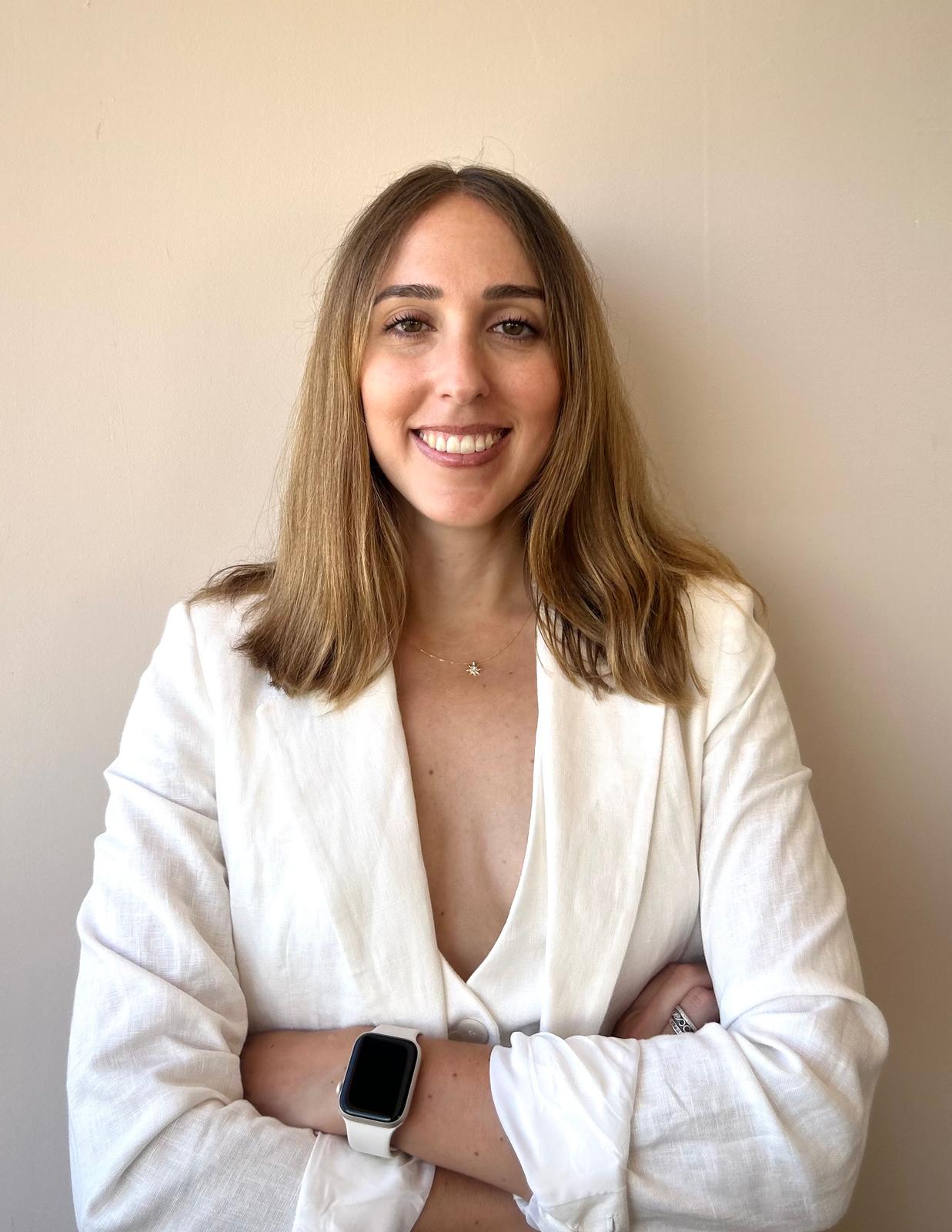
Victoria Cano-Sánchez
About Me
Welcome! I am a postdoctoral language researcher at the Universitat de les Illes Balears (UIB) and a member of the BASLA Linguistics research group, where I work with Prof. Pedro Guijarro-Fuentes. I also teach Spanish as a Foreign Language (ELE) at UIB's International Center for Spanish studies (CIEE), a center certified by the Instituto Cervantes.
My research lies at the intersection of psycholinguistics and cognitive aging, with a particular focus on how language is processed across the lifespan. To explore this topic, I use a wide range of statistical, behavioral, and experimental methods to better understand language processing, with a strong emphasis on eye-tracking and, more recently, electroencephalography (EEG) techniques.
I received my Ph.D. in Linguistics (International, Cum Laude) from the University of the Basque Country (UPV/EHU). My dissertation, Age-Related Differences in Language Processing: Eye-Tracking Sentence Reading Patterns in Spanish, was supervised by Dr. Mikel Santesteban and Prof. Itziar Laka. Prior to my doctoral studies, I earned a B.A. in Translation and Interpreting studies (University of Málaga, Spain), and several master’s degrees: in Legal Translation (University of Córdoba, Spain), Language Teaching (University of Alicante, Spain), and Theoretical and Experimental Linguistics (UPV/EHU, Basque Country)—an academic path shaped by my inherently curious and inquisitive nature, and a constant drive to learn and explore new disciplines.
Before entering academia full-time, I taught in the public secondary education systems in Spain and France, founded VCS Traducciones and worked as a freelance translator for institutions such as CSIC, FISABIO, and KONGSBERG MARITIME.
2026 Victoria Cano-Sánchez. All rights reserved.
Research
My research centers on fundamental questions about how language is processed across the lifespan and how predictive mechanisms support comprehension. How do humans anticipate upcoming words and structures during real-time language processing? To what extent are these mechanisms affected by (healthy) aging, and how are they shaped by lifelong linguistic experience and cognitive resources? To address these questions, I have so far combined behavioral and attentional methods (e.g., eye-tracking) with an increasing focus on neuroimaging techniques (EEG, fMRI, MEG) to investigate predictive processing at both lexical and morphosyntactic levels. While most of my work has so far focused on sentence reading in Spanish, I aim to extend these findings to typologically diverse languages in order to generate cross-linguistically robust conclusions. Please, feel free to contact me if you’d like access to these articles or want to know more.
1. Healthy aging
In the domain of healthy aging, my work examines how age-related changes in cognition interact with linguistic experience to shape predictive processing. Rather than assuming uniform decline, I investigate the balance between preserved abilities, potential improvements, and resource-driven limitations. My findings suggest that lexical prediction benefits more directly from accumulated linguistic experience, whereas morphosyntactic prediction is more constrained by working memory and attentional control. Building on these insights, my future research will integrate fMRI, MEG, and EEG to capture the neural dynamics underlying predictive mechanisms, thus offering a more comprehensive view of performance and brain activity in aging. These efforts will also aim to determine when along the aging spectrum cognitive abilities begin to decline and how linguistic experience may offset such decline. My work on this topic has included so far:
- Cano-Sánchez, V., Laka, I. & Santesteban, M. (under review.) Predictive abilities in language processing in the healthy elderly brain: a focus on lexical and morphosyntactic processing. Journal of Language, Cognition and Neuroscience.
- Cano-Sánchez, V., Laka, I., Foucart, A. & Santesteban, M. (in prep.). The burden of surprise in older adults: effects of lexical prediction failure under cognitive constraints.
2. Bilingualism & sociolinguistic perspective
Beyond monolingual aging, I investigate how bilingualism modulates predictive processing. Lifelong management of two languages may reshape executive control and influence the balance between lexical and morphosyntactic prediction. Exploring these questions helps disentangle the interplay between cognitive resources and language experience, providing a broader understanding of how language processing adapts across diverse populations. Another strand of my research within this area has focused on sociolinguistic contexts, examining regional languages in Spain, such as Valencian/Catalan, to study the patterns of language use and maintenance among the youngest populations. This perspective highlights the importance of considering not only bilingualism itself, but also the sociolinguistic environments in which it develops. My work on this topic has included so far:
- Benaiges, K.*, Cano-Sánchez, V.* & Santesteban, M. (under review) Does bilingualism shape predictive language processing? Evidence from lexical and morphosyntactic cues.*First co-authorship. Bilingualism: Language and Cognition.
- Cano-Sánchez, V., Vida-Castro, M. & Villena-Ponsoda, J.A. (in prep.) A sociolinguistic study on the current situation of the Valencian language in Alicante, Valencian Community. First approach to linguistic uses and attitudes in Mutxamel. [A Spanish version of this study is currently available here].
3. Language and neurodegenerative diseases
While much of my work has focused on language in healthy aging, I am also deeply interested in how neurodegenerative diseases (such as MCI, Alzheimer's, and aphasias, affect language.
Based on my dissertation findings, which show that healthy aging is associated with greater decline in morphosyntactic than lexical prediction, my current research agenda has two main short-to medium-term foci. First, I aim to study how predictive mechanisms evolve from healthy to pathological aging, with particular focus on individuals with amnestic MCI. Second, I aim to study grammatical processing, linking deficits observed in conditions like non-fluent progressive aphasia to predictive mechanisms and individual cognitive differences, and exploring protective factors in pathological aging.
2026 Victoria Cano-Sánchez. All rights reserved.
Media
2026: Article published at Zientzia Kaiera magazine. (Available here in Basque).
2026: Article published at Letras Libres magazine. (Available here in Spanish).
2026: Article published at Cátedra de Cultura Científica magazine: Mujeres Con Ciencia (Yo investigo) (Available here in Spanish).
2025: Article published at the local newspaper Diario Información (Alicante, Spain): “The myth of growing older” (Available here in Spanish).
2025: Article published at La Verdad (Murcia, Spain): “The memory of Cristóbal so known as “Caíllo” inspires his granddaughther's dissertation” (Available here in Spanish).
2025: Interview. EITB Radio Euskadi, “La mecánica del caracol: Lenguaje y envejecimiento” (Available here in Spanish ).
2025: Interview. ONDA CERO Bizkaia “Más de uno” (Available here in Spanish. From: 11:54-18:08).
2025: Interview at radio esRADIO Valencia:. “Language processing” (Available here in Spanish).
2024: Research coverage. Senior Class Magazine nº5, Spring. “How does our brain age?” (Available here in Spanish).
2023: Radio interview at ONDA CERO Vitoria, “La Brújula de Euskadi” (Available here in Spanish. From: 4.00).
2026 Victoria Cano-Sánchez. All rights reserved.